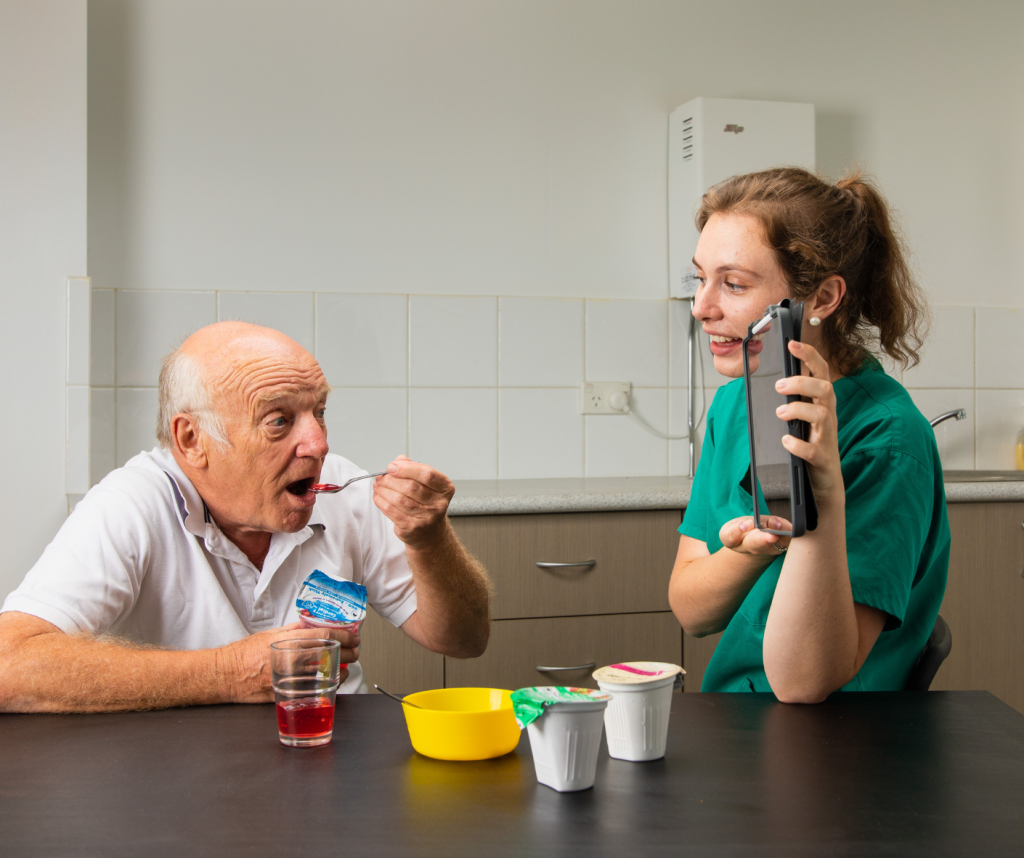
Aphasia is a language disorder that impairs your ability to speak, comprehend, read, or write. It does not affect your intelligence and typically occurs after events like stroke, traumatic brain injury (TBI), tumour, or neurodegenerative conditions.
Speech-language pathologists (SLPs), commonly known as speech therapists, are trained to help people rebuild and adapt their communication skills through personalised, evidence-based therapy.
At Pop, our neuro-affirming approach to speech therapy means we empower adults navigating life after brain injury to reconnect with family, friends, and community.
We work on real-world communication goals, like ordering coffee, recalling stories, or maintaining conversations, so that meaningful interactions are always within reach.
Looking for support for aphasia?
Discover how online speech therapy can support your loved oneโs goals by booking a free advice call.
How Does the Brain Support Language and Communication?
Our brainโs language network spans areas that process meaning (semantics), form (syntax), sound (phonology), and motor planning. When one region is affected by stroke or injury, it disrupts these functions. However, our brains are adaptable and, with guided support, can rewire and develop new pathways.
Adults rely on communication skills constantly:
- Asking a barista for a coffee
- Reading a text message from a child
- Writing an email to a colleague
- Telling a story about their day
- Understanding reading instructions
- Participating in a meeting
- Saying goodbye at catchโup
- Making travel arrangements
When aphasia limits these basic social interactions, independence, and connection, these can have a massive impact on an individual’s life.
Understanding Aphasia
Aphasia is an acquired neurogenic language disorder due to damage in the brainโs language regions (asha.org; verywellhealth.com). It may affect spoken expression, comprehension, reading, and writing to differing degrees.
Around 140,000 Australians suffer from aphasia (aphasia.org.au).ย SLPs donโt formally diagnose aphasia, but they assess language function using standardised tools, consult with medical professionals and can be part of an individualsโ holistic health care team.
Signs of Aphasia
Aphasia can be identified by speech-language pathologists (SLPs) and caregivers through observations of an individual’s:
Verbal Expression:
- Difficulty finding everyday words.
- Speaking in short or incomplete sentences.
- Mixing up words or inventing new ones.
Comprehension:
- Trouble understanding spoken or written information.
- Difficulty reading menus or signs.
Written Expression:
- Writing that is jumbled or missing key words.
Are you concerned that your loved one has aphasia?
Ask a Pop speech pathologist for free advice. Book a 15 minute discovery call with one of our experienced speech therapists here.
Aphasia Causes and Challenges
Aphasia usually stems from a brain insult, stroke (most common), TBI, tumour, or disease. Some individuals may have higher risk due to factors like age or history of vascular issues.
Without support:
- Spoken or written communication can remain impaired
- Social isolation and frustration often increase
- Mental health can decline, adding stress for caregivers
- Independence, like managing finances or participating in group life, can be affected
Do Children Ever Have Aphasia?
Yes, children can acquire aphasia, typically in the same way adults can acquire aphasia – after a TBI, stroke or brain infection (aphasia.org.au). While rare, the implications are similar: disruptions in ageโappropriate language development and potential academic challenges. In kids, therapy focuses on building foundational language through play-based, neuroโaffirming methods, just as we do with adults.
Benefits of Aphasia Treatment
Speech therapy for aphasia offers numerous benefits beyond just improving reading, writing, and speaking skills. These include:
โ Reducing feelings of isolation and bridging communication gaps during the period of greatest difficulty, reducing feelings of loneliness.
โ Improving important communication for daily needs, such as:
- clearly communicating pain or discomfort.
- requesting meals or assistive equipment.
- participating in family conversations.
- confidently using services like banking or transport.
- expressing emotions, including frustration, joy, and love.
- building self-esteem through successful interactions.
- maintaining social connections, including participation in group chats.
โ Promoting overall well-being, which can lead to:
- increased independence at home.
- a return to work or meaningful activities.
- improved mental health.
- stronger social networks.
โ Alleviating carer burden, and lowering frustration and strain experienced by caregivers.
Recognising the Signs: When to Seek Speech Therapy
Will aphasia go away on its own?
In many cases, initial recovery happens quickly, but progress often slows after a few months.
What are the common indicators of aphasia?
- Frequent pauses or struggling to retrieve common words
- Speaking in fragmented or telegraphic sentences
- Difficulty understanding what others say
- Misreading signs or instructions
- Mixing up words (e.g., โtableโ for โchairโ)
- Trouble reading a text or text message
How Long Does Speech Therapy Take?
Speech therapy starts with assessment, understanding current language function in areas such as naming, comprehension, reading, writing, and verbal expression.ย
Progress might look like:
- Improved naming and fewer speech hesitations
- Stronger sentence structure in everyday conversation
- Better comprehension of spoken and written messages
- Regained confidence in ordering food, making calls, writing emails
Most adults begin to show meaningful progress within 12โ20 weekly sessions, however, every journey is different.
Start Your Speech Therapy Journey with Pop Family Today!
Speech therapy can help adults with aphasia rediscover communication, independence, and connection. At Pop, our neuro-affirming clinicians tailor therapy to your loved ones daily goals, support them with evidence-based techniques, and provide compassionate care in the comfort and safety of their own home.
Book a Free Discovery Call About Aphasia
Begin with a free Discovery Call to explore how speech therapy can support your loved ones today.