If you’ve ever found yourself acting as the “chief translator” for your child at a family BBQ or a local playground, you’re already an expert on their intelligibility. In clinical terms, that’s a measure of how much of a person’s speech a listener can actually understand.
It’s a common part of the parenting journey hearing your child call the car a ‘tar’ or a spoon a ‘poon’, but sometimes, the bridge between what a child wants to say and what the world hears needs a little extra support. While “unclear” speech is normal as kids grow, persistent difficulty with specific sounds can make it hard for them to communicate their needs to teachers and peers. This is where Speech Sound Disorders (SSD) come into the picture.
What is a Speech Sound Disorder SSD?
A Speech Sound Disorder or SSD is an umbrella term for the various challenges a child might face when learning to produce sounds or organise them into speech. Think of speech like a complex dance between the brain and the mouth. Sometimes the dancer knows the steps but the music is confusing; other times, the muscles just need a bit more rehearsal.
SSD looks different for everyone, but as Speech Pathologists, we generally look at four main types of Speech Sound Disorders.
Four Types of Speech Sound Disorder:
Articulation Disorder
This is often a “physical” or “motor” challenge. The child knows the sound they want to make but struggles with the placement of their tongue, teeth, or lips (like saying “thun” for “sun”, or lisping).
Phonological Disorder
This is less about the muscles and more about the brain’s “filing system.” The child creates shortcuts and patterns to their speech such as “fronting” (saying “tar” for “car”). Your speechie might suggest a hearing check with an Audiologist to ensure they are hearing the sounds correctly.
Childhood Apraxia of Speech (CAS)
A motor-planning challenge where the child has difficulty coordinating the message between their brain and their lips, tongue and jaw. You might notice the child having difficulty finding the place for sounds or inconsistencies in how they say words.
Dysarthria
This involves muscle weakness or reduced coordination, often linked to neurological differences. Speech may sound slurred or “breathy.”
What is a Speech Sound Disorder SSD?
While every child learns at their own pace, speech development generally follows a predictable pattern and different sounds are achieved as different milestones. These milestones aren’t meant to be “pass/fail” tests; they are markers that help differentiate between typical developmental errors (like a toddler saying “wabbit” for “rabbit”) and a speech sound disorder that might need extra support.
You can read our full guide on speech milestones by age here.
Diagnosing and Treating a Speech Sound Disorder
Speech Pathologists are responsible for the diagnosis and treatment of SSDs. Speech Pathologists also work with Audiologists, Dentists and Orthodontists to ensure your child can hear the sounds, and has no barriers to making them.
Speech Therapy For Speech Sound Disorders
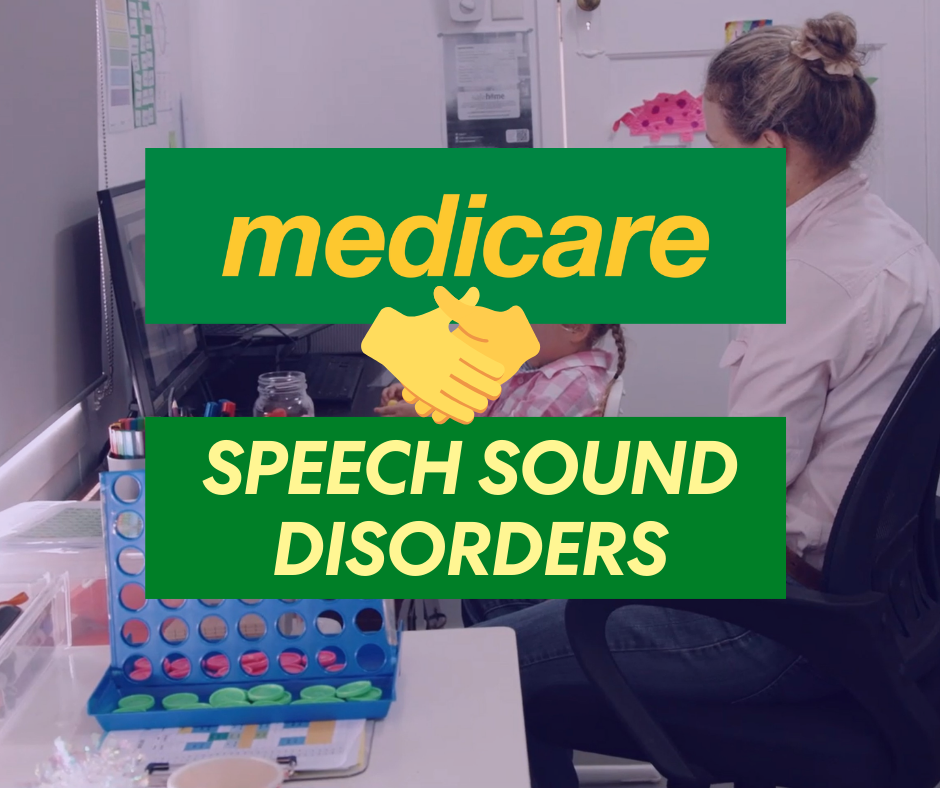
You might be wondering what actually happens behind the screen during an online speech therapy session. While it might look like “just play” to a casual observer, every game of Tic-Tac-Toe and Connect4 is a carefully structured clinical intervention.
Speech therapists break down the complex physics of talking into manageable, fun steps. We use “visual cues” like hand gestures or images to show where the tongue goes, or work on “auditory discrimination” to help your child hear the difference between a “tea” and a “key” before they try to say it. We use high-repetition, evidence-based techniques to build the muscle memory and neurological pathways needed for clear speech.
Why Pop Stands Out
At Pop Online Speech Therapy, we’ve moved far beyond the outdated idea of “fixing” a child. Instead, focus on giving them the tools to navigate social situations and being understood with ease.
We provide neuroaffirming support and celebrate the unique way your child’s brain is wired. We aren’t here to change who they are; we’re here to ensure their voice is heard exactly as they intended.
From a quality-of-life perspective, our goal is whatever will make the most difference to your family. Whether it’s your child feeling brave enough to ask a new friend to play or telling a long story to a grandparent without being asked to repeat themselves, we focus on the milestones that matter most to your family.
How to Receive Medicare Funding for Speech Sound Disorders (SSD)
Navigating your child’s Speech Sound Disorder journey is now more affordable. From 1 March 2026, the Australian government has added SSD to the “Diagnosis & Treatment for Eligible Disabilities” list (Department of Health and Aged Care, 2025).
Speech Sound Disorder Medicare Rebate at a Glance:
Navigating your child’s Speech Sound Disorder journey is now more affordable. From 1 March 2026, the Australian government has added SSD to the “Diagnosis & Treatment for Eligible Disabilities” list (Department of Health and Aged Care, 2025).
Under the “Diagnosis & Treatment for Eligible Disabilities” initiative, “Speech Sound Disorders” are now explicitly included. Here is the breakdown:
- Rebate Amount: $87.25 per session.
- Assessment for potential Speech Sound Disorder: Up to 8 assessment sessions over a lifetime (max 4 per discipline).
- Treatment of Speech Sound Disorder: A maximum of 20 treatment sessions (released in two blocks of 10).
Support for Receiving Medicare Funding for Your Child’s Speech Sound Disorder
Navigating Australian government rebates for speech therapy shouldn’t feel like a solo mission.
At Pop, we make the process easier. Our free discovery phone calls with an experienced speech pathologist are designed to help you understand if your child needs speech therapy. Plus, where applicable, we can provide you with a professional letter of recommendation to take to your GP. This letter outlines the suspected disability and the exact Medicare Benefits Schedule (MBS) item numbers your GP needs for telehealth services to get you started sooner.
Ready to see how online speech therapy can work for your family?
Book a free 15-minute discovery call with an experienced speech therapist to see how we can support your child.
Book Your Free Discovery Call & Get Your GP Letter
References:
1. Department of Health and Aged Care. (2025, December). Diagnosis and treatment for complex neurodevelopmental conditions: Fact sheet. Australian Government.
https://www.health.gov.au/sites/default/files/2025-12/diagnosis-and-treatment-for-complex-neurodevelopmental-conditions-fact-sheet_0.pdf