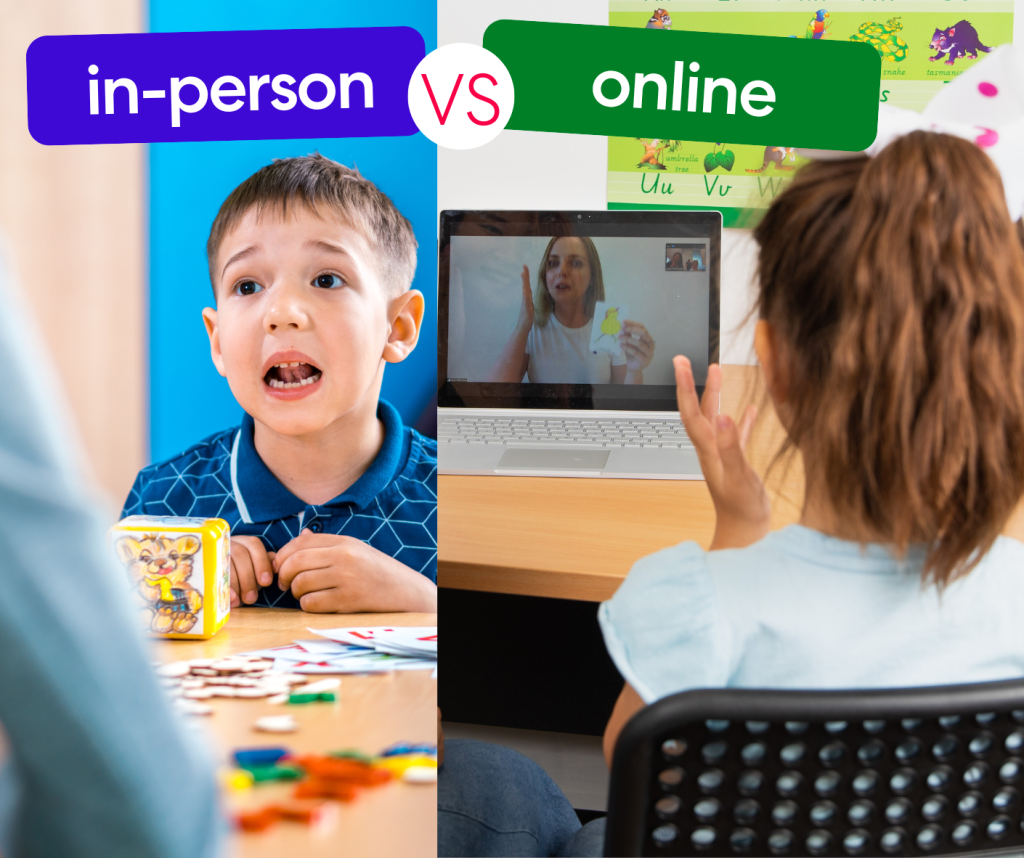
Over the past decade, and especially since the COVID-19 pandemic, telehealth or telepractice has emerged as a transformative way to deliver speech pathology services. But how effective is it really? Can online therapy match the depth and quality of traditional, face-to-face sessions?
Pop is an early adopter, industry leader and an innovator in telehealth, launching their online speech therapy services in 2016. Grown from a need for more high-quality allied health services for families living out bush, Heidi and her Pop clinical team have transformed the clinical foundations of speech therapy and adapted it to excel in a videocall model to support more families around Australia reach their potential.
Whether you’re a parent exploring therapy for your child or an adult needing support with communication, understanding how telehealth speech pathology works is key.
Want to ask a speech therapist how telehealth speech therapy could work for your family?
Chat to a Pop Speech Therapist for free over the phone.
✅ The Evidence: Is Telehealth Speech Therapy as Effective as In Person Speech Therapy?
The short answer is: yes! Telehealth speech therapy is just as effective as in-person therapy.
Numerous studies, including systematic reviews published in peer-reviewed journals, have found that telepractice can lead to comparable outcomes for a wide range of communication disorders. These include:
Speech Pathology Australia affirms the use of telepractice and acknowledges the growing body of evidence showing its positive outcomes (speechpathologyaustralia.org.au).
🔎 Why Telehealth Speech Therapy Works So Well
1. Natural Environments = Better Adaption
Therapy that takes place in a client’s home or school setting (via telehealth) often allows for better carryover of skills into everyday life. This is especially true for early intervention and functional communication therapy.
2. Flexibility and Access
Families in rural or remote areas, with tight schedules, or who are frequently moving, can access a therapist trained in the specific clinical area they need. This means no time spent travelling, more consistent attendance and fewer missed sessions, which can all contribute to reaching a client’s goal sooner.
3. Empowering Parents and Carers
Telehealth shifts some of the focus to parent or caregiver coaching, which research shows can lead to better long-term outcomes. Clinicians guide families in real time during natural interactions, increasing the child’s opportunity to practice skills.
4. High Engagement Through Technology
Children often find online platforms engaging, and therapists can use interactive games, videos, and digital resources tailored to their interests. Children can also use the toys in their own home that they are already familiar with and bonded to.
🧠 Clinical Skill Still Matters Most
The real question parents and carers need to ask is: how is the telehealth speech therapy CLINIC managing their needs, goals and difficulties?
Just like in-person therapy, if you don’t find a speech therapy service that has:
- ongoing professional development;
- adequate supervision and oversight; and
- experience or training in the area of support required;
…then they aren’t going to be the best choice, regardless of whether they are over a screen or in-person.
Ultimately, whether therapy is delivered online or in person, the therapist’s skill, planning, rapport, and flexibility are what drive progress. Telehealth is simply the tool, it’s how it’s used that makes the difference.
Successful online speech pathology requires:
- Thoughtful session design planned around the clients interests
- Adapting plans in-session to accommodate the clients mood or focus while still working towards goals
- Active caregiver involvement (especially for younger children)
- Regular reviews and adjustments based on progress
Looking for an industry-leading telehealth speech therapy service to support your child?
Ask us how can help your child meet their speech therapy goals.
💡 Tips for Getting the Most Out of Telehealth Speech Therapy
- Set up a quiet, distraction-free space
- Use a laptop or tablet, phones can often be too small to properly engage with what’s on the screen
- Have toys, books, or familiar items ready – your speech therapist can provide a list before the session or adapt to what’s on hand
- Make sure an adult is available for support during the session
- Share feedback with your clinician regularly so they can adapt to your needs
📊 The Verdict
Telehealth speech pathology is highly effective for many communication and language needs, and just as impactful as in-person services. It offers convenience, accessibility, and flexibility, while still delivering strong clinical outcomes.
With any allied health service, a personalised approach is always essential. The best speech therapy service is the one that fits your goals, your lifestyle, and your therapy needs.
In the end, connection and consistency matter more than physical location.
Want to learn more about how online speech therapy works for children and adults? Read our Top 3 FAQs on how telehealth speech pathology works here.
Wondering if telehealth is right for you or your child?
Get in touch with a certified speech pathologist to discuss a plan tailored to your needs.